Practical
Trains, passes, prices, customs and the things that catch visitors out.
Switzerland is easy to travel in and expensive to travel in, and most of what goes wrong for visitors comes from a handful of specific things rather than from general unfamiliarity.
The short list, before the detail:
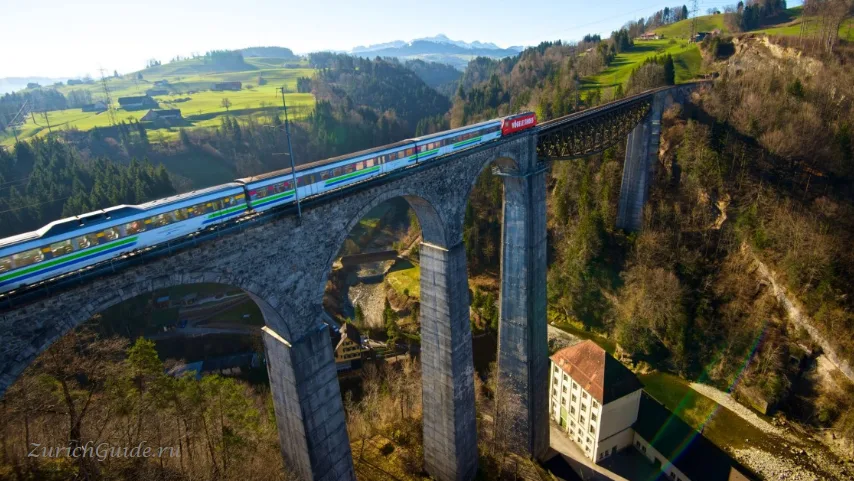
- You almost certainly do not need a car. The railway reaches everywhere worth going, runs to the minute, and includes buses and boats on the same ticket.
- Work out the pass arithmetic before you arrive. The right pass saves a great deal; the wrong one costs more than paying as you go.
- Ticket inspection is real. Nobody checks as you board, which misleads people constantly, and the fine is heavy.
- Cards work everywhere except parking meters. Carry a little cash for those and for tips.
- The duty-free allowance at the border is low — 300 francs a head — and it is enforced, particularly on the road crossings.
- Tap water is drinkable everywhere, including from the street fountains. Carry a bottle and refill it — that, and not free water in restaurants, is where the saving is.
Everything below goes into these in turn. Prices move every year, so where a figure matters this site points at the official source rather than repeating a number that will be wrong by next season.
Getting around Switzerland
One timetable covers trains, buses, boats and mountain railways, and connections are built to be made rather than to look good on paper.
Tickets and passes
The Swiss Travel Pass, the Half Fare Card, the Saver Day Pass and the regional cards, and how to work out which of them pays for itself.
Money in Switzerland
The franc, where cards work and where they do not, whether to bother changing money, and how to claim the VAT back on the way out.
Switzerland on a budget
It is the most expensive country in Europe and there is no trick that changes that. These are the things that genuinely help, in order of how much they save.
Switzerland with children
Children travel free or nearly free, the trains have play carriages, and the country is set up for this to a degree that surprises people.
When to go, and the weather
Four distinct seasons, two shoulder periods when half the country shuts, and one rule about mountain weather that decides more days than any other.
Customs and the border
Switzerland is not in the EU, the duty-free allowance is low, and the road borders are where it is enforced.
Driving in Switzerland
You need a sticker on the windscreen before you touch a motorway, and the speeding penalties are among the most severe in Europe.
Shopping and souvenirs
Opening hours that close early and shut on Sundays, an outlet village worth the detour, and what is actually worth buying.
Languages in Switzerland
German, French, Italian, Romansh — and the German is not the German you learned.
Updated: